






Full article published in: Citeline
Each year, Scrip asks over 30 prominent biopharma executives, including our CEO, Liesbeth Ceelen, to gain insights on how funding, M&A, and partnerships are expected to shape the industry in the coming year.
We understand the vital role of robust data strategies in navigating this evolving landscape.
As our CEO, Liesbeth Ceelen, highlights:
“In today’s challenging investment landscape, biotech companies must rigorously validate their science and data to de-risk clinical trials and obtain insights into a broader range of applications for their therapeutic approaches. Leveraging insights from both public and proprietary information is no longer a luxury, but a necessity for attracting momentum, the need for precise, actionable insights has never been greater.”
This focus on data and validation aligns with broader trends, including the rise of partnerships across biopharma, academia, and technology sectors. With innovative approaches like AI-powered drug discovery, gene editing, and radiopharmaceuticals gaining momentum, the need for precise, actionable insights has never been greater.
At BioLizard, we’re proud to partner with life sciences companies to unlock the full potential of their data and drive impactful outcomes. Together, we can shape the future of biopharma.

BioLizard is proud to have received the Best Poster Award at the European Society for Spatial Biology (ESSB) conference, recognising our work on benchmarking cell segmentation methods for single-cell spatial transcriptomics.
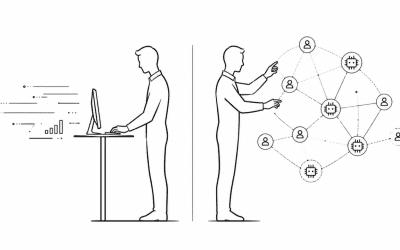
Paul Vauterin has transitioned from Chief Technology Officer (CTO) to Chief Operating Officer (COO) at BioLizard, reflecting a shift in focus towards helping organisations integrate AI into their operations and unlock greater value from their data.
For over a century, the life sciences industry has relied on animal models as the standard for predicting drug safety and effect. But today, the industry faces a harsh reality: over 90% of new drugs that appear safe and effective in animal tests ultimately fail in human clinical trials (see for example Ineichen et al. 2024 [1] and Marshall et al. 2023[2])