






Large language models have been around for years, but ChatGPT’s launch in late 2022 put them in everyone’s hands. Instead of needing technical skills, you could simply ask a question in plain language and get an answer.
Almost four years later, it is reshaping how research is conducted in biotech and pharma. For most bioinformaticians, chat assistants that search internal documents or help write analysis code have become a routine part of everyday work.
However, there are clear limitations. A chat interface without access to your tools and data can explain and summarise biomedical knowledge, but it cannot run a full analysis. It stops right before the real work begins.
The next step is to let AI do the actual work, not just talk about it. That is what agentic AI does. Rather than guiding a scientist through each step, it can be given a task like “annotate this single-cell dataset” and get results back. Chat-based AI helps scientists work faster; agentic AI transforms how the work gets done.
Agentic AI is easiest to understand as three separate layers.
The first layer is the “Hands”. The AI runs tools itself instead of telling you how: pulling a dataset from a public repository, running BLAST or AlphaFold, launching an analysis pipeline on your own infrastructure. It reaches those tools and your data through standard interfaces such as APIs or the Model Context Protocol (MCP).
The second layer is the “Brain”. It plans the work and decides what happens next: splitting a job across several agents, giving each one a role, re-running a step whose output does not hold up. This is what turns a set of tools into a workflow that can run without someone watching every step.
The third layer is the “Imagination”. Here the AI proposes what to look at next: a hypothesis worth testing, a compound worth screening, a signal in the data that nobody thought to ask about. It is the youngest of the three layers, and the one with the most room to grow.
Take a job that genomics teams run every week: annotating cell types in a single-cell dataset. The Hands perform the pipeline, from quality control through clustering to marker genes. The Brain keeps it on track, sending a cluster back for stricter quality control when it turns out to be mostly dying cells. And when a cluster matches no known cell type, the Imagination proposes what it might be, for the scientist to accept or reject.
The first benefit of agentic AI is saving time. In a study published in Science, the Biomni agent annotated cell types with 45.8% accuracy, in the same range as the two experts it was compared with (40.5% and 50.9%, both with at least five years of experience), and cut the average analysis time from 235 minutes per dataset to 72 (Huang et al., 2026). For a team processing 100 datasets a year, that is roughly 270 hours back: hours a biologist can spend on biology instead of on pipelines and report formatting.
An independent benchmark shows where it breaks (Luo et al., 2026). Across 15 expert-labelled datasets, every agent tested, Biomni included, completed all six pipeline steps from quality control to marker genes. The last step was harder: deciding what the clusters actually are. No agent matched a bioinformatician working with a standard annotation tool overall, and one could not assign cell types at all. The hours you get back are pipeline hours. The judgement stays with the scientists.
The second benefit is getting more value from the data you already have. In our work with biotech and pharma teams, we regularly see datasets that were generated for one question, never analysed again. When an analysis takes minutes instead of days, going back to those datasets with a new question becomes worth doing. This is also where the Imagination layer starts to pay off: every new question asked of existing data is another chance to spot something unexpected.
Beyond single-cell analysis, AI co-scientists already propose and refine hypotheses in iterative loops (Gottweis et al., 2026), and multi-agent systems are starting to automate bioinformatics workflows more broadly (Mehandru et al., 2025; Zhou et al., 2025).
At BioLizard, we believe that the more AI advances, the more valuable human scientific expertise becomes. The role shifts from running the analysis to directing and judging it: choosing the questions worth asking, checking and interpreting what the agents produce, and validating findings in the lab.
That doesn’t make the human role any less important. In fact, reviewing an analysis you didn’t carry out yourself requires a strong understanding of the science. You need to know what to look for, what makes sense, and where things might have gone wrong along the way.
The real competitive advantage will come from how effectively organisations integrate AI into their research workflows. Organisations that remain only using AI at the chat level will see incremental gains. Those that embrace agentic AI have the potential to unlock far more value from both their data and their scientific teams, automating complex workflows, accelerating analysis, and freeing scientists to focus on interpretation, problem-solving, and discovery. The opportunity lies not just in making existing processes faster, but in rethinking how research gets done. The chatbox was the starting point, not the destination.
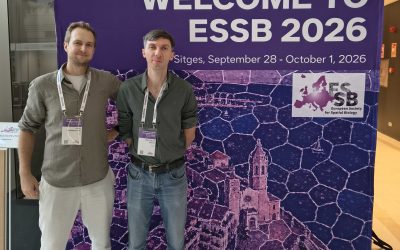
BioLizard is proud to have received the Best Poster Award at the European Society for Spatial Biology (ESSB) conference, recognising our work on benchmarking cell segmentation methods for single-cell spatial transcriptomics.
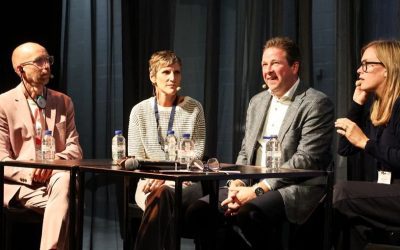
KMOinsider and Netwerkers.be, host a panel of four perspectives on leadership, with discussions spanning strategy, communication, trust, autonomy and the role of people in organisational growth.
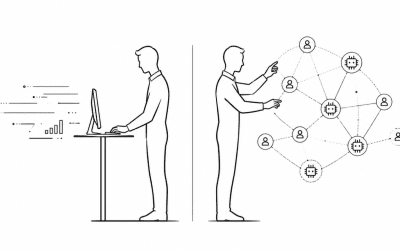
Paul Vauterin has transitioned from Chief Technology Officer (CTO) to Chief Operating Officer (COO) at BioLizard, reflecting a shift in focus towards helping organisations integrate AI into their operations and unlock greater value from their data.