





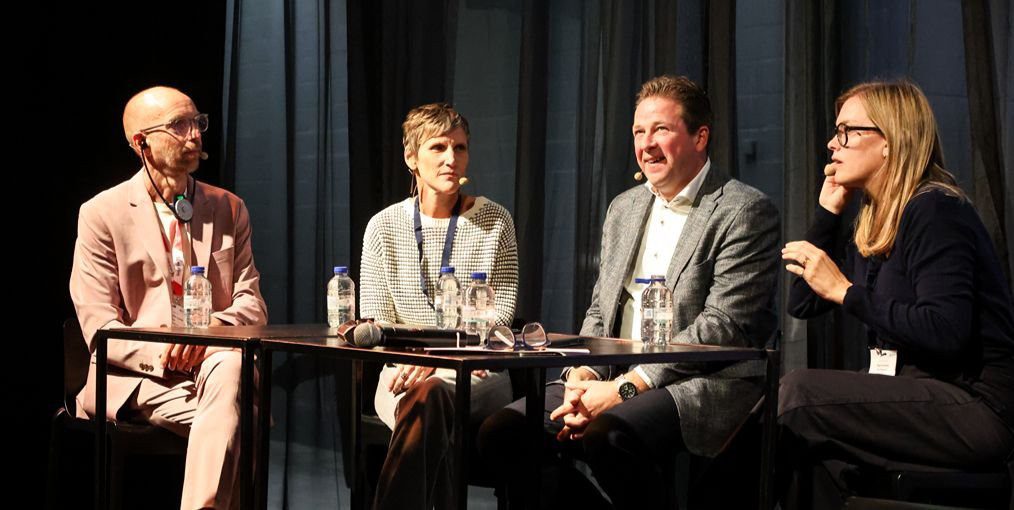
What happens to leadership when a company grows rapidly? And how do you keep people aligned as the organisation evolves? These were some of the questions discussed during Business@Breakfast at Transport & Logistics in Flanders Expo, Ghent, where BioLizard CEO Liesbeth Ceelen joined a panel of leaders to explore the theme “Leiderschap in beweging: van strategie naar menskracht”.
Hosted by KMOinsider and Netwerkers.be, the panel brought together four perspectives on leadership, with discussions spanning strategy, communication, trust, autonomy and the role of people in organisational growth.
Growth changes the way you lead
Since joining BioLizard in 2019, Liesbeth has seen the company grow from a team of five to around 50 people. That growth has brought new opportunities, but also new leadership challenges.
One of the key lessons from that journey is the importance of communication, particularly during periods of change.
For leadership teams, a decision may feel well understood after weeks or months of discussion. Employees, however, do not experience the same process. They may not have heard the conversations that led to a decision or understand all the factors behind it.
That makes repetition essential.
“Leaders cannot overcommunicate” was one of the central messages from Liesbeth’s contribution to the discussion. Communication is not simply about delivering information once. It means returning to important messages, adapting them to different audiences and making sure they have actually been understood.
Autonomy needs a framework
The panel also explored the balance between giving people freedom and maintaining direction.
As organisations grow, leaders cannot continue to make every decision themselves. Delegating responsibility and giving employees the space to act becomes increasingly important. But autonomy does not mean a lack of structure.
People need to understand where they have the freedom to make decisions, where they need to consult others, and what expectations they are working towards.
In other words, trust and clarity need to go together.
This is particularly relevant in knowledge-driven organisations such as BioLizard, where expertise and independent thinking are central to the way teams work.
People and performance are not opposites
Another recurring theme was the relationship between a people-focused leadership approach and business performance.
Willem ter Heerdt of ING Belgium described this as being “soft on people, hard on the business”: supporting people and helping them develop while remaining clear about expectations and results. Executive coach and author Stijn Staes similarly argued for a leadership approach that combines authenticity, trust and connection with a strong focus on outcomes.
For growing companies, this balance becomes increasingly important. Leadership is not about choosing between people and performance. It is about creating the conditions in which people can contribute effectively while understanding what the organisation is working towards.
Leadership is a continuous learning process
The conversation also highlighted how much is now expected from leaders. Beyond setting strategy and delivering results, leaders are increasingly expected to support their teams through change, communicate effectively, provide feedback, navigate different working styles, and keep pace with new technologies such as AI.
That makes leadership development an ongoing process.
And learning does not necessarily happen in a classroom. Conversations with other leaders, sharing experiences and discussing what has worked, what has not, and how others have approached difficult situations can be equally valuable.
For Liesbeth and BioLizard, that exchange of perspectives is particularly relevant as the company continues to grow and evolve.
Leadership starts with people
Although the discussion took place within the context of the transport, logistics and supply chain industry, its central message extended well beyond those sectors.
Technology, processes and strategy may drive organisational change, but people determine how successfully that change is implemented.
For BioLizard, where scientific expertise, collaboration and curiosity sit at the heart of the organisation, that is a particularly important principle.
As Liesbeth’s experience of growing BioLizard demonstrates, the bigger the organisation becomes, the more important clear communication, trust and connection become.
Business@Breakfast opened Transport & Logistics with a conversation about leadership. The discussions continued beyond the panel, with attendees encouraged to take the connections and conversations from the breakfast into the wider event and beyond.
Leadership may begin with strategy, but ultimately, it is people who bring that strategy to life.

AI has quickly become part of everyday biotech research, helping scientists navigate information, write code and make sense of complex data. But chat-based tools have their limits. They can provide answers and guidance, but they cannot always do the actual scientific work. As biotech moves beyond the chatbox, the next step is putting AI to work directly within research workflows.
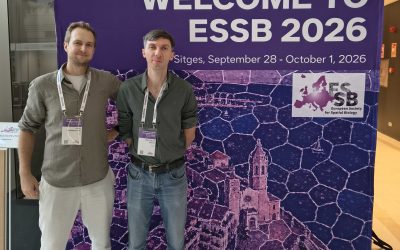
BioLizard is proud to have received the Best Poster Award at the European Society for Spatial Biology (ESSB) conference, recognising our work on benchmarking cell segmentation methods for single-cell spatial transcriptomics.
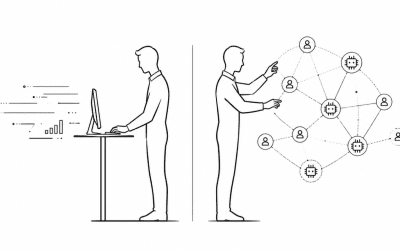
Paul Vauterin has transitioned from Chief Technology Officer (CTO) to Chief Operating Officer (COO) at BioLizard, reflecting a shift in focus towards helping organisations integrate AI into their operations and unlock greater value from their data.